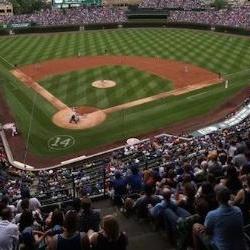
Major League Baseball's All-Star Game is the prototype for all the others. Baseball's chance to show off its greatest talents all at once has been a midsummer hit since its inception in Chicago's Comiskey Park in 1933. The concept of an all-star game owes itself to Arch Ward, a Chicago Tribune sports editor, who wanted baseball to participate in the 'Century of Progress' Expo being held that summer. He nagged the leagues to set up a vote for the all-stars, and managers and fans chose a gathering of the nation's hottest players, Babe Ruth and Lou Gehrig among them. Though Babe Ruth was in the twilight of his career, he hit the first All-Star home run. The game was an economic success; Comiskey Park sold more than 49,000 tickets.
Over the years, the All-Star Game (dubbed the Midsummer Classic) has undergone more tinkering than any other aspect of Major League Baseball. The voting for All-Star honors has swung between managers and fans. After allegations that Cincinnati fans had stuffed ballot boxes in 1957, the fans were removed from the decisions from 1958-1969, allowing coaches and players a voice. From 1970 on, the fans have had the right to choose starters again. Since 2003, to encourage managers and fans to think of the All-Star Game as a 'real' game, home-field advantage for the World Series be earned by winning the All-Star Game.
As in most pro sports, baseball's All-Star Game rotates among the different cities with teams. In baseball, it also alternates between leagues. But wherever your All-Star Game tickets take you, expect to be seeing the best of the best at America's traditional national pastime.